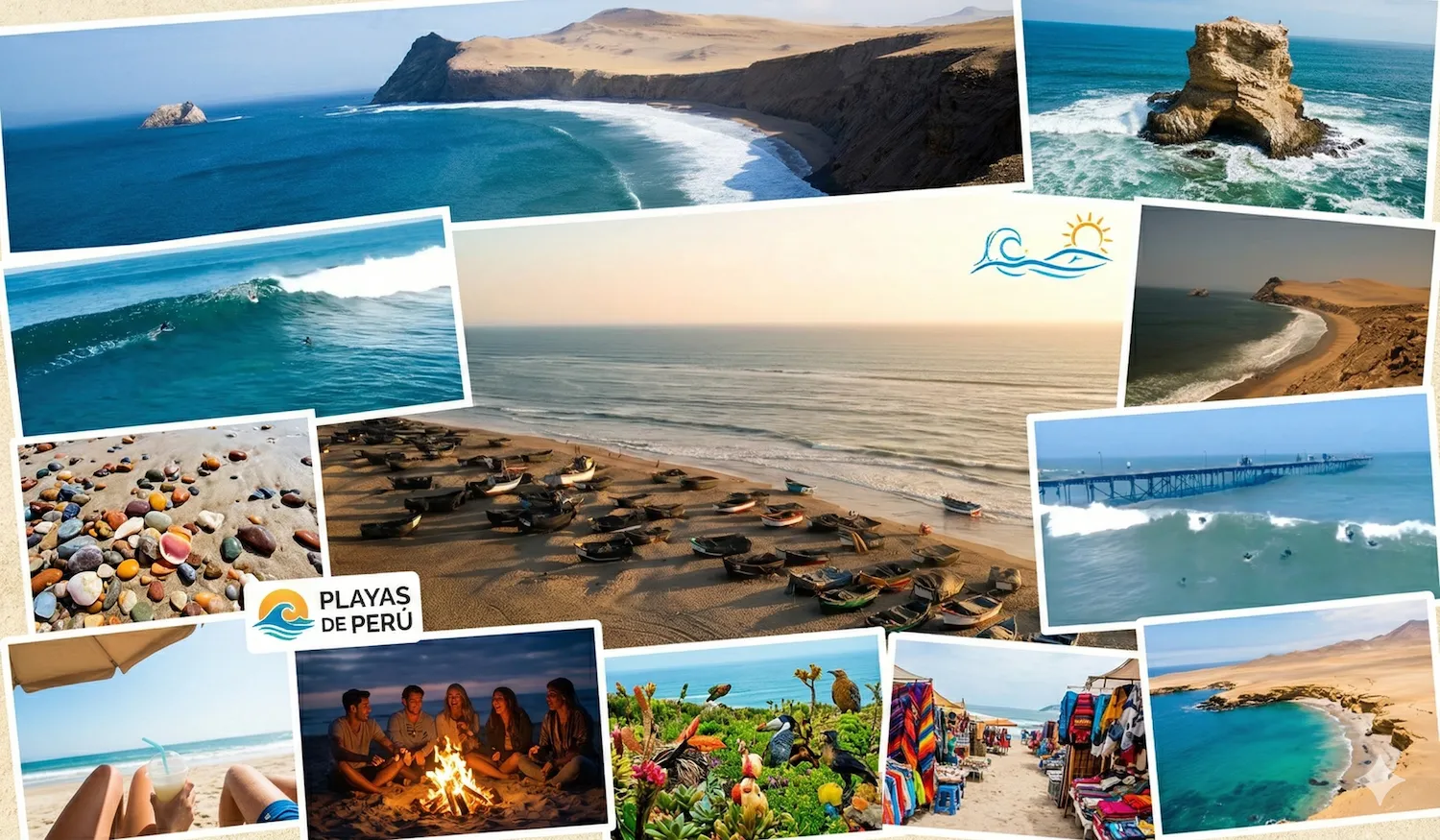
Peru: Waves All Year, But Not All the Same
With over 3,000 kilometers of coastline facing the Pacific Ocean, Peru is one of the few countries where you can surf 365 days a year. However, the quality, size, and consistency of the waves vary enormously depending on the season and region.
The key lies in understanding two phenomena: south swells generated by Antarctic storms (April to October) and north swells arriving from the North Pacific (November to March). Each activates different stretches of the coast and completely transforms the surfing experience in Peru.
In this guide, we explain month by month what to expect from the Peruvian sea, which spots work in each season, water temperatures by region, and how to plan your surf trip according to the time of year. All information is based on data from Stormrider Surf Guides, Surfline, ocean temperature records, and scientific sources on South Pacific climate.
The Two Major Surf Seasons in Peru
Unlike other destinations where surfing is seasonal, Peru has the advantage of receiving swell from two opposite directions depending on the time of year. This means there is always some stretch of coastline working.
Peruvian Winter (April - October): South Swell Season
This is Peru's main surf season. Storms forming in the Southern Ocean and Antarctica (at latitudes known as the "Roaring Forties") generate groundswell that travels thousands of kilometers northward. These swells reach the Peruvian coast from south (S), south-southwest (SSW), and southwest (SW) directions.
- Average size: 1.0 to 2.5 meters, with days of 3 meters or more on the biggest swells.
- Period: 14 to 20+ seconds — groundswells with high energy and well-shaped waves.
- Consistency: High. From May to September, it rarely goes more than 3-4 days without surfable waves.
- Favored regions: The entire coast, but especially Lima, Ica, La Libertad, and Lambayeque. The north (Piura) also receives these swells at south-facing breaks like Lobitos.
It is during this season that Chicama, Pacasmayo, Punta Rocas, Pico Alto, and Lima's spots show their best form. Experienced surfers wait for these months for the best sessions of the year.
Peruvian Summer (November - March): North Swell Season
Winter storms in the North Pacific generate swell that travels southward, reaching northern Peru from north (N) and northwest (NW) directions.
- Average size: 0.5 to 1.5 meters, with occasional bigger days.
- Period: 8 to 14 seconds — generally shorter than south swells.
- Consistency: Lower. North swells are more irregular and less predictable.
- Favored regions: Northern Peru, especially Tumbes (Zorritos, Punta Sal) and Piura (Máncora, Cabo Blanco, Los Órganos).
This season offers warm water, sunshine, and an ideal beach atmosphere, especially in the north. It is the best time for beginners and those looking to combine surfing with a tropical vacation.
Month-by-Month Calendar: What to Expect
Here is a detailed summary of typical conditions each month, based on historical wave data and records from Stormrider Surf Guides and Surfline.
January - February: Peak Summer
Northern Peru is at its best. Northwest swells activate Máncora, Cabo Blanco, and Los Órganos. Water reaches its maximum temperature (up to 27-28°C in Tumbes). In Lima and the south, waves are small and less consistent, though west swells can still produce surfable waves. The best time for beginners in the north and for enjoying the ocean without a wetsuit.
March: The Transition
A month of change. North swells begin to weaken while the first south pulses start to appear. Pico Alto begins to awaken with the first big swells. It is an unpredictable month but one that can deliver great sessions in both regions. Chicama can have unexpectedly good days with northwest swells.
April - May: The Main Season Kicks Off
South swells establish themselves with force. Consistency increases week by week. Chicama starts working and Lima's spots receive solid swell. Lobitos and Panic Point in Piura fire with southwest swells. An excellent time to surf: the waves are here but the peak-season crowds have not yet arrived.
June - August: Peak Winter
The best time of year for surfing in Peru. South swells are the biggest and most consistent, with periods of 14 to 18+ seconds. Chicama can offer rides over one kilometer long. Pico Alto reaches waves up to 8-10 meters face height. Punta Rocas, Pacasmayo, Cerro Azul, and the entire central coastline are at their peak.
July and August are the months with the highest frequency of XXL swells. In 2014, the Billabong Pico Alto WSL event was held with 10-12 meter waves. This is also when southern Peru (Mollendo, Camaná, Ilo) receives the rawest energy from Antarctic swell.
September - October: Southern Autumn
South swells remain consistent though they begin to gradually lose intensity. Water temperature is at its coldest (15-16°C in Lima). September still offers excellent conditions at most spots. In October, the first northwest swells begin reaching the north, creating a transition window where both regions can work.
November - December: Summer Settles In
North swells take center stage. Máncora and Órganos begin receiving increasing swell. Cabo Blanco can light up with its famous barrel (it only works with north swells, approximately 8 days per year). The water warms up quickly. In Lima, waves decrease but southwest pulses can still arrive. Chicama can surprise with a northwest swell in December.
Where to Surf by Season
Not all spots work equally in every season. Here we show which spots fire in each season based on the dominant swell direction.
Best Spots in Winter (April - October) — South Swell
- Chicama (La Libertad): The longest wave in the world. Needs clean S-SSW swell. Best from April to September, peaking June-August.
- Pacasmayo (Lambayeque): Long left over rock. Handles up to 6 meters of swell. Less crowded than Chicama.
- Punta Rocas (Lima): Powerful left over rock. Consistent from March to November. World championship venue.
- Pico Alto (Lima): Giant waves up to 8-10 meters. Season from March to August. Experts only.
- Lobitos - Panic Point (Piura): Works best with S and SSW swells. Barrel waves up to 3 meters.
- Cerro Azul (Lima): Long, mellow left. Ideal for longboarding. Very consistent in winter.
- Huanchaco (La Libertad): 99% consistency according to Surfline. Works year-round but shines with south swells.
- Mollendo (Arequipa): The deep south. Receives the rawest energy from Antarctic swell. Pure adventure.
Best Spots in Summer (November - March) — North Swell
- Máncora (Piura): Left with N-NW swells. Water up to 27°C. Waves of 1-2 meters. Tropical vibe.
- Cabo Blanco (Piura): Peru's Pipeline. Only works November-March and very few days per year. Experts only.
- Los Órganos (Piura): Gentle beach break. Exceptional with north swells. Ideal for beginners.
- Zorritos (Tumbes): Open beach breaks that catch N-NW swells. Warm water.
- Pimentel (Lambayeque): Beach and point break. Good performance with summer swells.
Spots That Work Year-Round
- Huanchaco: Its orientation allows it to catch swells from multiple directions.
- Lobitos: Receives north swells (summer) and south swells (winter) at different peaks.
- Punta Hermosa (Lima): Multiple waves in horseshoe bays. There is always something surfable.
- San Bartolo (Lima): Consistent beach break. The "school" of Lima surfing.
Water Temperature by Region and Season
The Humboldt Current is the dominant factor in Peruvian sea temperature. This cold current flows from Antarctica northward along the entire coast, making the waters unusually cold for tropical latitudes. Data based on SeaTemperature.org records.
North: Tumbes and Piura (3°-6° S)
- Summer (Dec-Mar): 22-28°C — The warmest in the country. You can surf in boardshorts.
- Winter (May-Oct): 18-21°C — A 2/1mm spring suit or 3/2mm shorty recommended.
Central-North: La Libertad and Lambayeque (7°-9° S)
- Summer: 19-22°C — Pleasant with a spring suit or light fullsuit.
- Winter: 16-18°C — 3/2mm fullsuit necessary.
Central: Lima and Ica (11°-15° S)
- Summer (Jan-Mar): 20-22°C — Comfortable with a 3/2mm fullsuit.
- Winter (Jul-Sep): 15-16°C — 4/3mm fullsuit recommended. Some surfers wear booties.
South: Arequipa and Tacna (15°-18° S)
- Summer: 20-24°C — 3/2mm fullsuit.
- Winter: 14-16°C — 4/3mm fullsuit with booties. The coldest water on the coastline.
Wind: Your Early Morning Ally, Your Afternoon Enemy
Wind patterns in Peru are fairly predictable and a key factor in session quality.
- Mornings (6-10am): Glassy conditions or light offshore wind from the east/northeast. The best hours to surf anywhere in the country. The ocean surface is smooth and waves maintain their natural shape.
- Midday (11am-1pm): Wind starts rotating to the southwest. Conditions gradually deteriorate.
- Afternoons (2-6pm): Onshore southwest wind. Messy, choppy waves with foam. Generally not worth surfing except at sheltered spots.
This pattern is more pronounced in winter (August-October are the windiest months). In summer, winds are generally lighter, allowing good sessions later into the morning.
Exception: Lobitos (Piura) is extremely windy almost year-round, making it one of the best kitesurfing destinations in Peru. It only calms down for a few weeks in January-February.
El Niño and La Niña: How They Alter the Waves
El Niño and La Niña phenomena can radically transform surf conditions in Peru. Understanding their effects is important for planning trips, especially during years with strong events.
El Niño: Warm Water and Anomalous Swells
- Water temperature: Can rise 3-9°C above normal. During the 1997-98 event, anomalies reached +8.7°C along the Peruvian coast (according to NASA Earth Observatory records).
- Swell: Unusual northwest swells may arrive, altering typical patterns. Chicama and southern spots can lose consistency.
- Rain and erosion: The 2017 coastal El Niño caused torrential rains that altered beach profiles and sandbars, affecting wave quality at many spots (source: Frontiers in Marine Science, 2023).
- Northern Peru: Can benefit from more frequent north swells and warmer water.
La Niña: Cold Water and Classic Swells
- Temperature: Colder than normal due to a strengthened Humboldt Current.
- Swell: More consistent and predictable south swells. Winter season generally better than average.
- For surfers: More "normal" conditions but with colder water. Bring a thicker wetsuit.
Big Swells: When the Most Powerful Waves Arrive
For big wave enthusiasts, Peru has a world-class spot: Pico Alto, off Punta Hermosa.
- XXL Season: March to August, peaking May-July.
- Maximum documented size: Waves up to 12 meters face height. Greg Long surfed a wave estimated at 40 feet (12m) during a Big Wave World Tour event (according to National Geographic).
- Frequency: Approximately 10 days per year with waves over 5 meters.
- Origin: The biggest swells come from deep low-pressure systems at 50-60° South latitudes, with periods of 18-22 seconds.
Southern Peru (Arequipa, Tacna) also receives massive winter swell, with powerful waves over rocky bottoms and strong currents. This is adventure surfing for experienced riders with proper equipment.
Quick Guide by Region
North: Tumbes and Piura — The Surf Tropics
Peru's far north is a world apart. Tumbes receives north swells that the rest of the coast does not pick up, and Piura is home to legendary spots like Cabo Blanco (compared to Pipeline) and Lobitos. Best time: November to March for north swells; April to October for south swells at Lobitos.
Central-North: La Libertad and Lambayeque — The Endless Lefts
La Libertad is the heart of Peruvian surfing, with left-handers every 10-20 kilometers. Chicama, Pacasmayo, Huanchaco, and Puemape are world-class references. Best time: April to October for south swells. Huanchaco works virtually year-round.
Central: Lima and Ica — The Most Accessible Surf
Lima offers world-class waves less than an hour from the capital. Punta Hermosa, Punta Rocas, Pico Alto, and San Bartolo cover all levels. Cerro Azul and San Gallán (off Paracas) are lesser-known gems. Best time: April to November, though there are waves year-round.
South: Arequipa and Tacna — The Wild Frontier
Remote coastline, powerful waves, and practically no other surfers. Mollendo is the gateway. A 4x4, adventurous spirit, and a good wetsuit are required. The Panamericana runs far inland, so coastal access requires planning. Best time: April to October with the most powerful south swells.
Tips for Planning Your Surf Trip
- If you want the best waves: Travel between May and August. This is the season with the biggest and most consistent swells across the entire country.
- If you want warm water and relaxation: January to March in the north (Máncora, Órganos, Lobitos). Boardshorts, sunshine, and good vibes.
- If you are a beginner: Summer in the north is ideal. Small waves, warm water, and many surf schools.
- If you want to avoid crowds: Southern Peru's spots and Lima's lesser-known beaches (Puerto Viejo, La Isla) offer solitude. Avoid long weekends and summer weekends at popular spots.
- Essential wetsuit: For Lima, a 3/2mm from April to November and a 4/3mm for July-September. In the north, you can surf in a rashguard or spring suit in summer.
- Best time of day: Always 6 to 10am. Afternoon onshore wind ruins conditions along nearly the entire coast.
Monitor Conditions with WaveSearch
Now that you know Peru's seasons and spots, the next step is to monitor conditions in real time. On WaveSearch, you can check the updated wave forecast for each spot, compare up to 3 beaches side by side, and set up personalized alerts so we notify you when conditions are ideal.
Check the Best Weekend tool to find out which spots are best for the upcoming weekend, or use Nearby Spots to find the best wave near you.
The Peruvian sea always has something to offer. You just need to know where and when to look. Happy surfing!